
A Truly Transformative Movement Practice Is Built on Both: Guidance and Independence
In a world filled with trends, quick fixes, and endless online workouts, it’s easy to believe that there is one “right” way to move your body. Some people rely entirely on instructors, believing that expertise must always come from the outside. Others prefer complete independence, trusting only their own instincts and avoiding guidance altogether.
But the truth is far more nuanced, and far more powerful.
A truly transformative movement practice requires both guidance and independence. It is not about choosing one over the other, but about understanding how each plays a vital role in your growth. When these two elements work together, they create a foundation that is not only effective, but sustainable, intelligent, and deeply connected.
This is especially true in Pilates, where movement is not just about performance, but about awareness, control, and integration. Whether you are just beginning your journey or have years of experience, the balance between being guided and working independently is what allows you to evolve, not just physically, but mentally and emotionally as well.
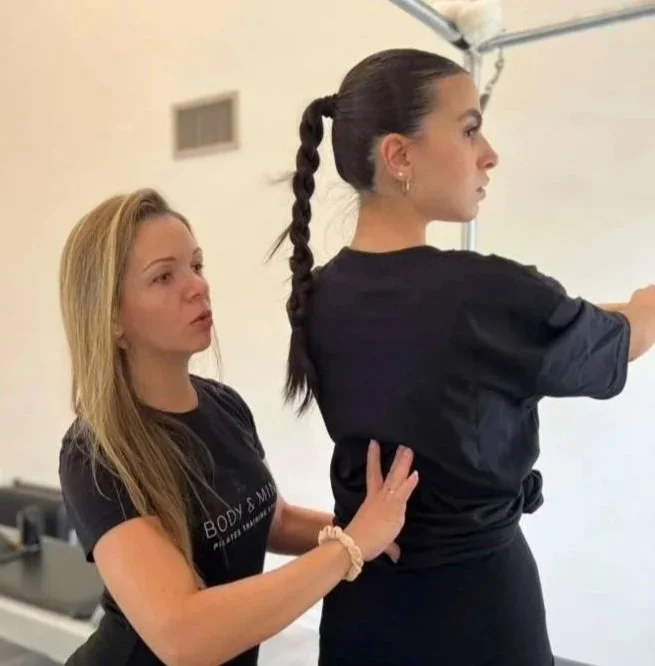
The 5 Advantages of Private Sessions with a Teacher
1. Personalized Attention That Meets You Where You Are
One of the most valuable aspects of private sessions is the level of personalization they offer. Your body is unique: your posture, your movement patterns, your injuries, your strengths, your habits.
A skilled teacher sees you as an individual, not a template.
They observe the way you move, identify compensations you may not even feel yet, and design a program that is specific to your needs. This level of attention allows for more efficient progress and ensures that your work is aligned with your body, not against it.
2. Real-Time Feedback That Shapes Your Practice
Movement is subtle. Small adjustments can make a profound difference.
In a private session, your teacher provides immediate feedback, guiding your alignment, refining your breath, and helping you engage the right muscles at the right time. Without this feedback, it’s easy to repeat patterns that feel correct but are not truly effective.
Over time, this external guidance becomes internal awareness. You begin to feel what is right, not just follow instructions.
3. Accountability That Builds Consistency
Consistency is one of the most important factors in any movement practice, and one of the hardest to maintain.
Having a scheduled session creates structure. It gives you a reason to show up, even on days when motivation is low. That consistency is what builds strength, mobility, and resilience over time.
A teacher doesn’t just guide your movement, they support your commitment.
4. Safe and Intelligent Progression
Progress is not about doing more. It is about doing better.
A knowledgeable teacher understands when to challenge you and when to hold you back. They guide your progression in a way that respects your body’s current capacity while gradually expanding it.
This is especially important if you are dealing with pain, limitations, or previous injuries. The right guidance helps you avoid setbacks and build strength in a way that is sustainable and safe.
5. Support and Confidence
Movement is deeply connected to how we feel.
A supportive teacher creates a space where you feel seen, safe, and encouraged. This environment allows you to explore your body without fear of judgment. Over time, this builds confidence, not just in your physical abilities, but in your relationship with yourself.
You begin to trust your body more. And that trust extends far beyond the studio.
The 5 Advantages of Working Out on Your Own
While guidance is essential, independence is where your relationship with your body becomes truly personal.
1. Developing Deep Self-Awareness
When you are alone in your practice, there is no external voice guiding you. There is only you: your breath, your sensations, your thoughts.
This is where awareness deepens.
You begin to notice how your body feels on different days. You recognize patterns, tension, imbalances, and shifts. This awareness cannot be given to you—it must be experienced.
And it is the foundation of meaningful movement.
2. Discovering Your Own Limits (The Most Important Element)
This is the most important aspect of working independently, and one that is often overlooked.
No matter how skilled or intuitive your teacher is, they are not in your body.
They cannot feel what you feel.
They cannot fully know your limits.
Only you can.
When you work out on your own, you are given the opportunity to explore your body with honesty. You begin to understand what your body can do—and just as importantly, what it cannot do.
This is not about pushing harder or proving something.
It is about listening.
It is about recognizing the difference between effort and strain, between challenge and compensation, between growth and overload.
This level of honesty is essential.
Because without it, you risk disconnecting from your body, either by holding back out of fear or pushing beyond what is appropriate.
But when you truly understand your limits, you move with intelligence, respect, and clarity.
You stop guessing.
You start knowing.
3. Building Independence and Trust in Yourself
There is something incredibly empowering about guiding your own practice.
You learn how to structure your sessions, how to choose exercises, how to adjust based on how you feel in that moment. You become less dependent on external direction and more connected to your internal cues.
This builds confidence, not just in movement, but in decision-making.
Your body becomes your reference point.
4. Integrating and Reinforcing What You Learn
Private sessions introduce concepts. Independent practice integrates them.
When you revisit exercises on your own, you slow down. You pay attention. You refine your understanding. You begin to embody the work rather than simply perform it.
Repetition, when done with awareness, is not redundant—it is transformative.
It is how knowledge becomes experience.
5. Flexibility and Consistency in Daily Life
Life does not always allow for scheduled sessions.
Working out on your own gives you the flexibility to move whenever you can, even if it’s just for a short period of time. These small, consistent moments of movement can have a profound impact over time.
They keep you connected to your body, even on your busiest days.

Why You Need Both
Private sessions and independent practice are not opposing approaches.
They are complementary.
One provides guidance. The other cultivates awareness.
One offers structure. The other creates freedom.
One refines your technique. The other deepens your relationship with your body.
If you rely only on a teacher, you may struggle to trust yourself when guidance is not present.
If you rely only on yourself, you may miss important corrections and limit your growth.
But when you combine both, you create a practice that is balanced, intelligent, and sustainable.
You learn, and then you embody.
You are guided, and then you discover.
The Deeper Truth: Your Body Is the Final Authority
At the end of the day, no teacher, no matter how experienced, can feel what you feel.
They can guide you.
They can observe you.
They can support you.
But they cannot be in your body.
That is your responsibility, and your power!
Developing the ability to listen to your body, to understand your limits, and to respond with honesty is what transforms movement from something you do into something you experience.
This is where real growth happens.
Final Thoughts
A truly transformative movement practice is not built on dependence, nor is it built on isolation.
It is built on balance.
It is built on the willingness to learn from others and the courage to listen to yourself.
So work with a teacher who challenges and supports you.
And just as importantly, give yourself the space to explore your body on your own.
Because transformation does not happen when you are only guided.
And it does not happen when you are only independent.
It happens when you are both.
