
The Art of Listening: Attention, Presence, and the Depth of Contrology
Contrology—what is widely known today as Pilates, was never intended to be a quick workout, a calorie-burning routine, or a task to check off a list. From its very origin, Contrology was conceived as a disciplined practice of conscious movement. The name itself tells us everything we need to know: control of the body through the mind. At the heart of Contrology lies one essential quality without which the method loses its meaning—listening.
Listening in Contrology is not limited to hearing instructions. It is a refined skill that involves attention, presence, patience, and awareness. It is the ability to receive information—verbal, physical, and sensory—without rushing to react. In a world that constantly pulls our attention outward, Contrology asks us to return inward. It asks us to slow down, to notice, and to develop an intimate relationship with our own movement.
This is not easy work. It is subtle, demanding, and deeply transformative.
The Crisis of Attention in Modern Life
We live in an age of distraction. Our days are filled with notifications, screens, multitasking, and constant mental stimulation. Even moments that were once quiet, waiting in line, walking, sitting…are now filled with digital noise. Over time, this environment reshapes our nervous systems. Our ability to focus diminishes. Our tolerance for stillness decreases. Our capacity to listen deeply erodes.
This loss of attention does not stay confined to our mental lives. It shows up in our bodies. We move faster, but with less awareness. We exercise harder, but with less precision. We push, override, and disconnect from sensation. Many people arrive at their Contrology practice already fatigued, not physically, but neurologically.
Contrology stands in direct opposition to this cultural pattern. It does not accommodate distraction. It does not reward speed or mindless repetition. Instead, it gently but firmly demands attention. Every exercise, every transition, every breath requires participation. There is no autopilot in Contrology.
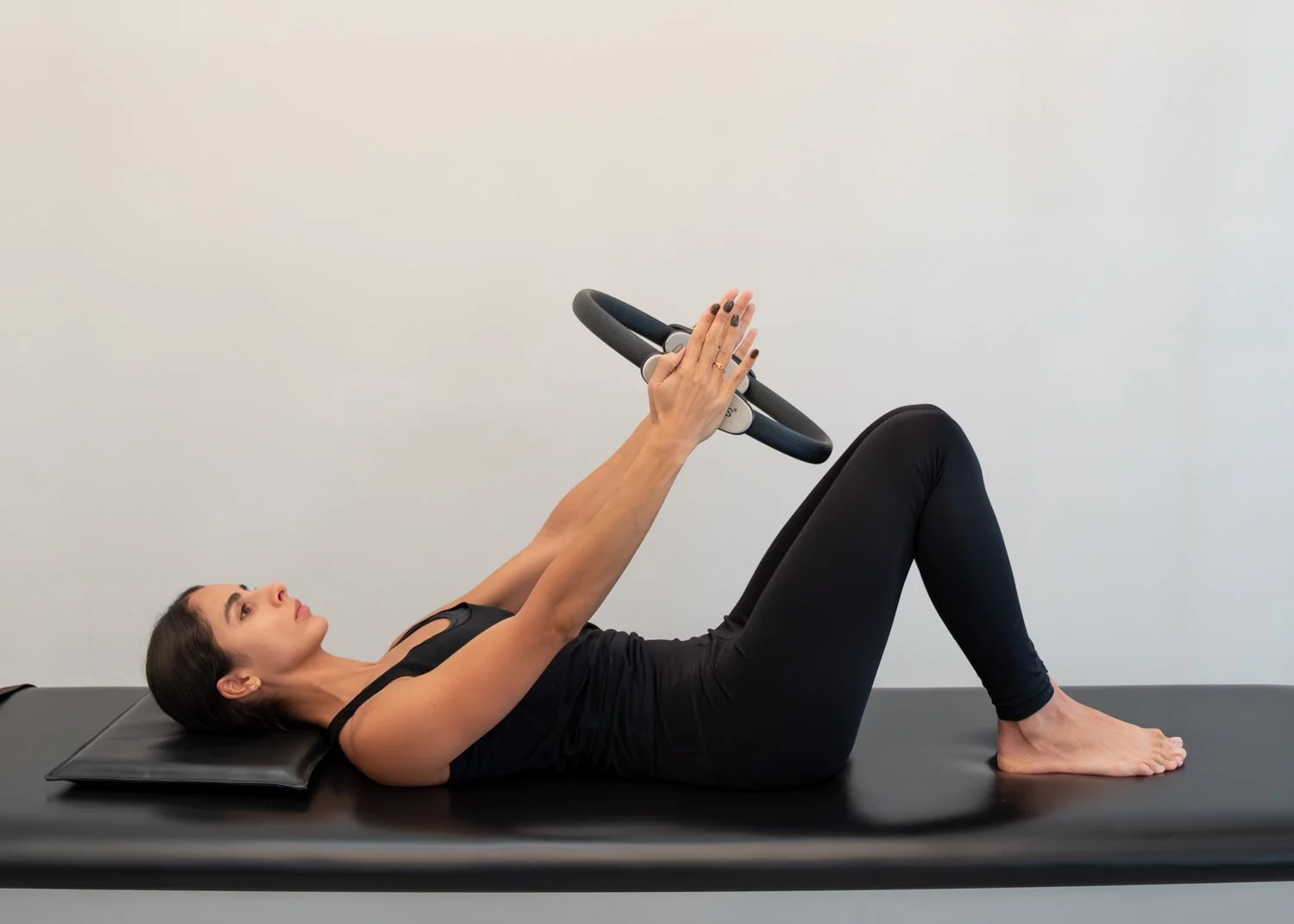
Contrology as the Discipline of Attention
Attention in Contrology is not passive. It is not simply “paying attention” in a vague sense. It is an active process that must be cultivated intentionally. Contrology trains attention the same way it trains strength, flexibility, and coordination, through repetition, refinement, and consistency.
When attention is present, movement becomes organized. Muscles work together rather than in isolation. Joints are supported rather than compressed. Breath flows naturally. When attention is absent, movement becomes fragmented. The body compensates. Patterns override intention.
This is why two people can perform the same exercise and experience completely different outcomes. The difference is not strength or flexibility. It is awareness.
In Contrology, progress is not measured by how advanced an exercise looks, but by how consciously it is performed. A simple movement done with full attention is infinitely more valuable than a complex movement done without awareness.
The Role of Verbal Cueing in Contrology
Verbal cues are one of the primary tools through which Contrology is taught and transmitted. But cues are often misunderstood. They are not commands. They are not corrections meant to impose shape onto the body. They are guides, language designed to direct attention.
A cue invites the practitioner to explore sensation, relationship, and intention. It asks the mind to engage with the body in a specific way. To benefit from a cue, one must listen without urgency. There must be space between hearing and doing.
In modern fitness culture, we are trained to react immediately. Faster responses are praised. In Contrology, restraint is valued. A cue is meant to settle into the nervous system before it is expressed through movement.
For example, a cue about spinal length is not an instruction to “stretch harder.” It is an invitation to sense axial extension, to notice how breath, alignment, and support create space. A cue about grounding through the feet is not about force, but about distribution. How weight, balance, and awareness interact.
When practitioners truly listen, movement becomes quieter and more efficient. Effort is reduced, yet results deepen. This is the intelligence of Contrology.
Listening to the Body: Developing Internal Awareness
One of the most profound aspects of Contrology is its ability to develop internal listening. This is the capacity to sense what is happening inside the body without relying on external mirrors, metrics, or validation.
Internal listening includes awareness of breath quality, joint response, muscular tone, and unnecessary tension. It also includes noticing emotional and neurological states—restlessness, fatigue, calm, or agitation.
Our culture often encourages us to override these signals. We push through pain, ignore fatigue, and equate discomfort with progress. Contrology offers a different paradigm. It teaches discernment rather than domination.
Listening to the body does not mean avoiding challenge. It means choosing the right challenge at the right time. It means recognizing when an exercise needs to be modified, slowed down, or approached differently. Over time, this builds trust. The body becomes a source of information rather than something to conquer.
This relationship is essential for sustainable practice. Without it, movement becomes extractive. With it, movement becomes restorative.
Breath as an Anchor for Attention
Breath is central to Contrology, not as a mechanical technique, but as a tool for attention. Breath connects the conscious mind to the physical body. It provides rhythm, continuity, and feedback.
When breath is shallow or held, attention narrows. Movement becomes forced. When breath is fluid and responsive, attention expands. Movement becomes coordinated.
Listening to the breath is often the first step in restoring presence. It brings awareness into the body. It signals the nervous system that it is safe to slow down.
In Contrology, breath is not something to control aggressively. It is something to observe, support, and refine. As attention improves, breath naturally becomes more efficient. This efficiency supports endurance, clarity, and calm.
Calm as a Gateway to Depth
Depth in Contrology does not come from intensity. It comes from calm. A calm nervous system allows the body to respond intelligently rather than reactively.
When we rush, hold tension, or chase outcomes, we limit our capacity to experience depth. Calm creates space.; space for sensation, space for choice, space for refinement.
This does not mean the work is easy. Contrology can be deeply challenging. But the challenge arises from precision and awareness, not from force.
Calm allows the practitioner to feel subtle changes in alignment and load. It allows joints to move with support rather than compression. It allows muscles to engage without gripping.
This is where Contrology distinguishes itself from many modern movement practices. It prioritizes quality over quantity, depth over display.
Progression Through Awareness, Not Accumulation
Progression in Contrology is often misunderstood. It is not about moving through exercises as quickly as possible or collecting more advanced variations. True progression is internal.
As awareness deepens, the same exercise offers new information. Familiar movements feel different. Patterns become clearer. Compensations dissolve.
This is why Contrology never becomes boring for those who truly practice it. The work evolves as the practitioner evolves. Listening is what makes this evolution possible.
Without listening, progression is superficial. With listening, progression is embodied.
Cultivating the Art of Listening
Listening is not a skill we master once and then possess forever. It requires continual practice. Contrology provides a structured environment in which this practice can unfold safely and consistently.
Each session becomes an opportunity to notice habits, refine attention, and deepen awareness. Over time, this way of listening extends beyond the studio. It influences posture, walking, breathing, and even how we respond to stress.
Contrology becomes more than movement. It becomes a way of relating to the body, and to life, with intelligence and respect.
A Closing Reflection
Contrology is not simply what we do with our bodies. It is how we show up to ourselves. It asks for presence in a world of distraction, listening in a culture of noise, and patience in an era of urgency.
By practicing Contrology with attention, we reclaim our focus. We learn to move with intention rather than impulse. We develop strength that is sustainable, coordination that is intelligent, and calm that is deeply restorative.
Listening is the thread that weaves all of this together. It is not passive. It is an active, disciplined, and deeply human practice.
And when we listen, truly listen, the work reveals itself. Quietly. Steadily. Profoundly.
